















Nanotechnology in Medical Diagnosis: 3 Powerful Tools
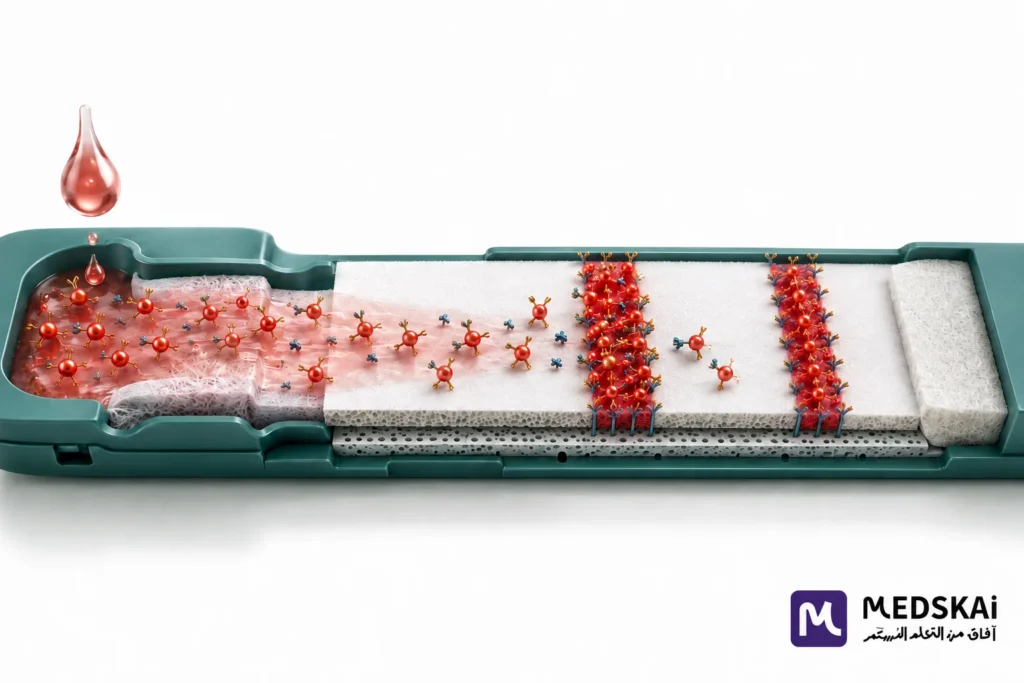
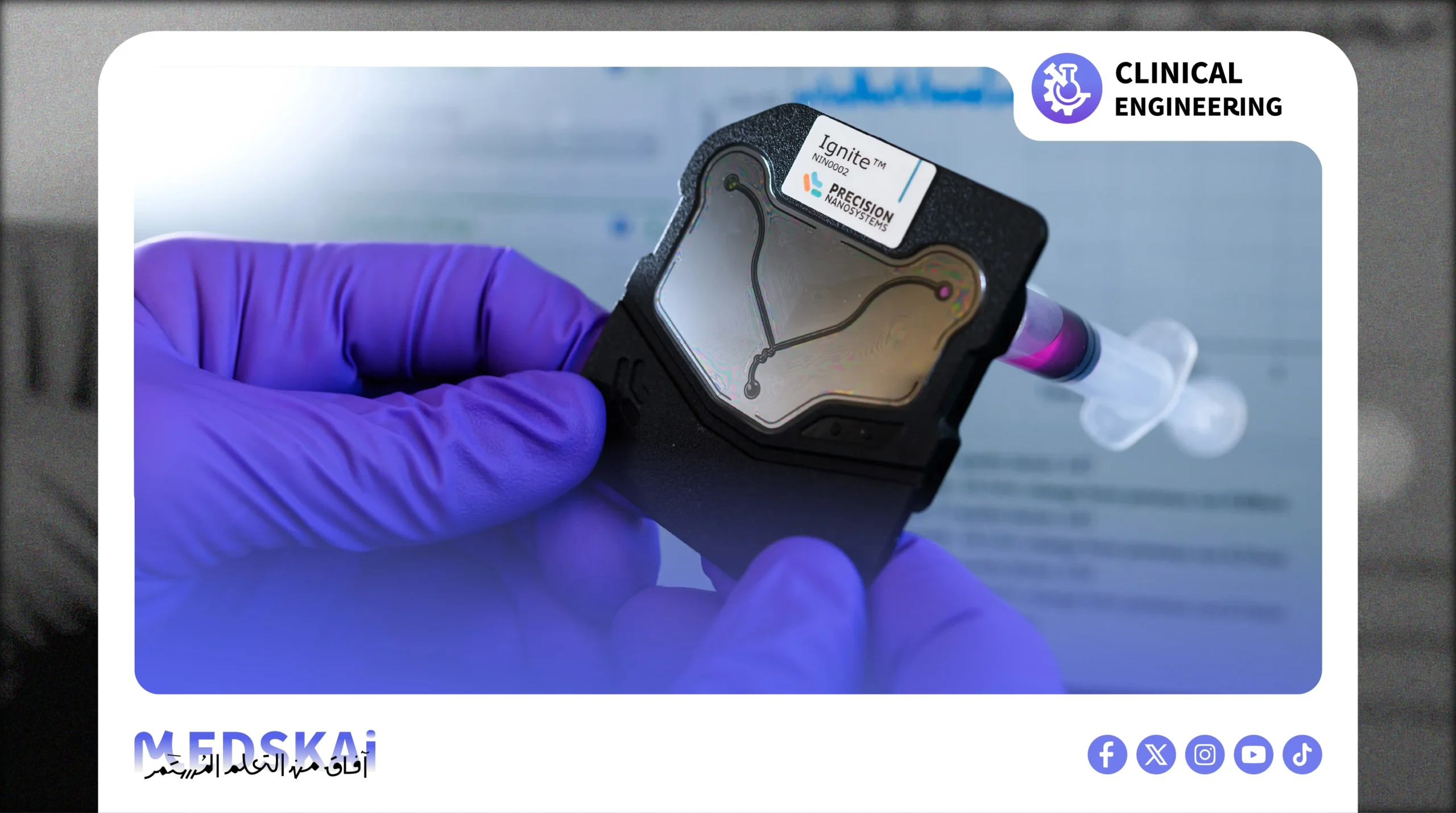
Nanotechnology in medical diagnosis means using engineered nanoparticles, usually between 1 and 100 nanometers, to detect disease-related molecules such as proteins, DNA, RNA, viruses, or cancer biomarkers at very low concentrations.
Odds are you have already used nanotechnology to diagnose something. The COVID-19 rapid antigen test that drew a colored line, the home pregnancy test that does the same. both run-on gold nanoparticles: specks of metal so small that thousands of them would sit across a single human hair. When the target molecule is present, those particles clump together and the strip turns visibly red. No lab, no machine, a result in roughly fifteen minutes.
That everyday strip is the most familiar face of a much larger shift. Many diseases do not announce themselves. They begin with faint molecular signals, a few stray proteins, a trace of tumor DNA, and a handful of viral particles. sitting well below what a conventional blood test can register. By the time symptoms appear, the disease has often had a head start. Nanotechnology is changing that arithmetic by building tools sensitive enough to read those early signals.
The momentum is visible in the numbers. The diagnostics segment of the nanotechnology medical-device market was valued at about US$5.15 billion in 2024 and is projected to reach roughly US$11.63 billion by 2035, according to Market Research Future, more than double in a decade.
This article is educational. The status of any specific Nano diagnostic varies by country, and many advanced applications are still in research and development to check the regulatory standing of a given test where you live.
How nanotechnology sharpens diagnostic accuracy
Nanotechnology improves diagnosis by letting engineered particles interact directly with disease molecules, almost one on one. Three properties do most of the work:
- A huge surface-area-to-volume ratio. Shrink a material to the nanoscale and nearly all of its atoms end up on the surface, where chemistry happens so a single particle offers many binding sites and can capture biomarkers present at extremely low concentrations.
- Signal amplification. A binding event that would be invisible on its own becomes a measurable change in color, fluorescence, or magnetism.
- Tunable surface chemistry (bioconjugation). Attaching antibodies, DNA or RNA probes, or other ligands lets a particle recognize one specific target and ignore everything else.
Put together, these give higher sensitivity and specificity, fewer ambiguous results, smaller sample volumes, and faster turnaround than many conventional essays, a pattern echoed across recent biosensor reviews.
How a nanoparticle test works
Strip away the jargon and most nano diagnostics follow the same three steps: The particles doing the work
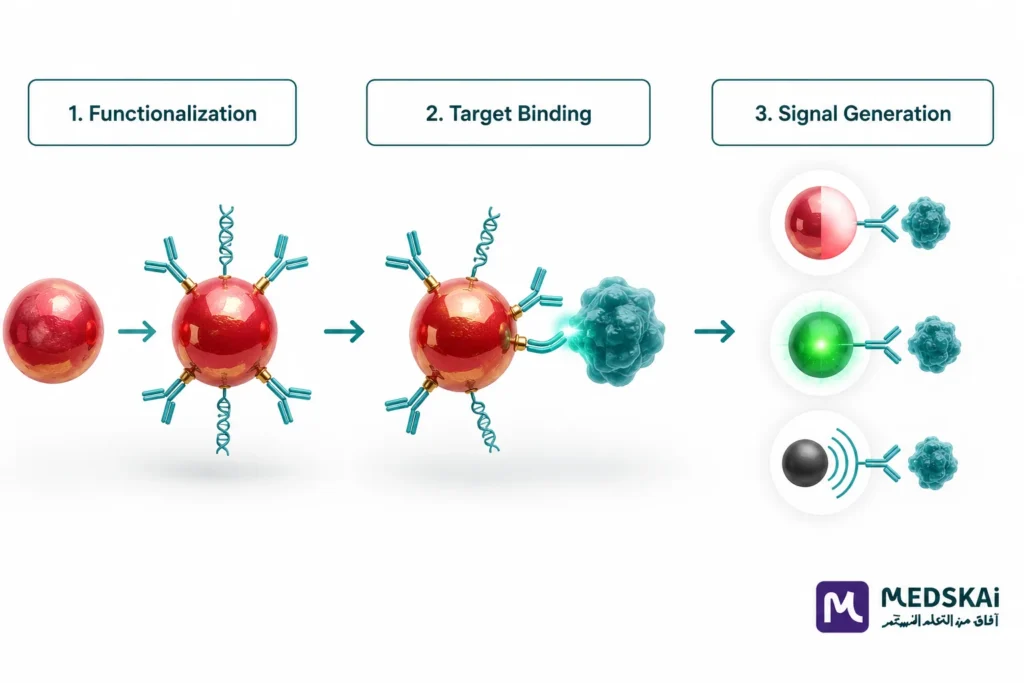
- Build and arm the particle. Gold nanoparticles, quantum dots, carbon nanotubes, or magnetic nanoparticles are synthesized, then coated with antibodies, DNA/RNA probes, or ligands. This bioconjugation is what gives the particle its aim.
- Design the assay around the target. Antibodies against a viral surface protein for an infection; complementary nucleic-acid probes for a genetic mutation; tumor-specific antibodies for a cancer marker.
- Generate and read the signal. On binding, gold shifts color, quantum dots fluoresce, and magnetic particles produce a magnetic response quantified by an optical, electrical, or magnetic reader.
The particles doing the work
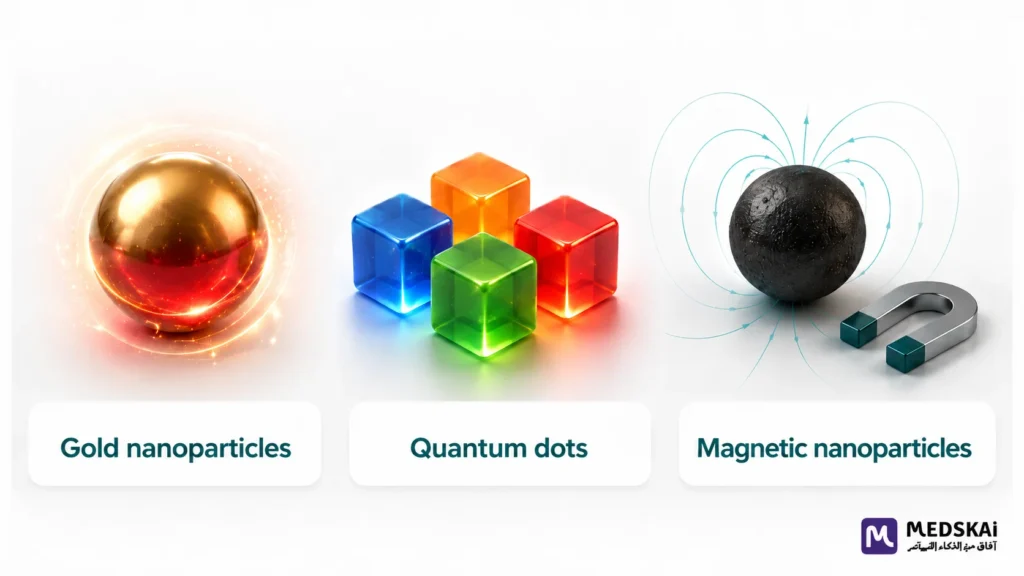
- Gold nanoparticles. Localized surface plasmon resonance gives them an intense, tunable color, the wine-red of a positive test line. They are cheap, stable when dried, and easy to attach antibodies to, which is why they dominate rapid lateral-flow tests.
- Quantum dots. Semiconductor crystals that fluoresce in a color set by their size. Make them slightly larger or smaller and the color shifts, so several can be read in a single sample at once handy for multiplex panels.
- Magnetic nanoparticles. Iron-oxide cores that a magnet can pull out of a messy sample, concentrating on the target and cutting background noise. Their signal is not affected by the non-magnetic clutter around them.
Where it is being used
Nano diagnostics already reach well beyond the research bench.
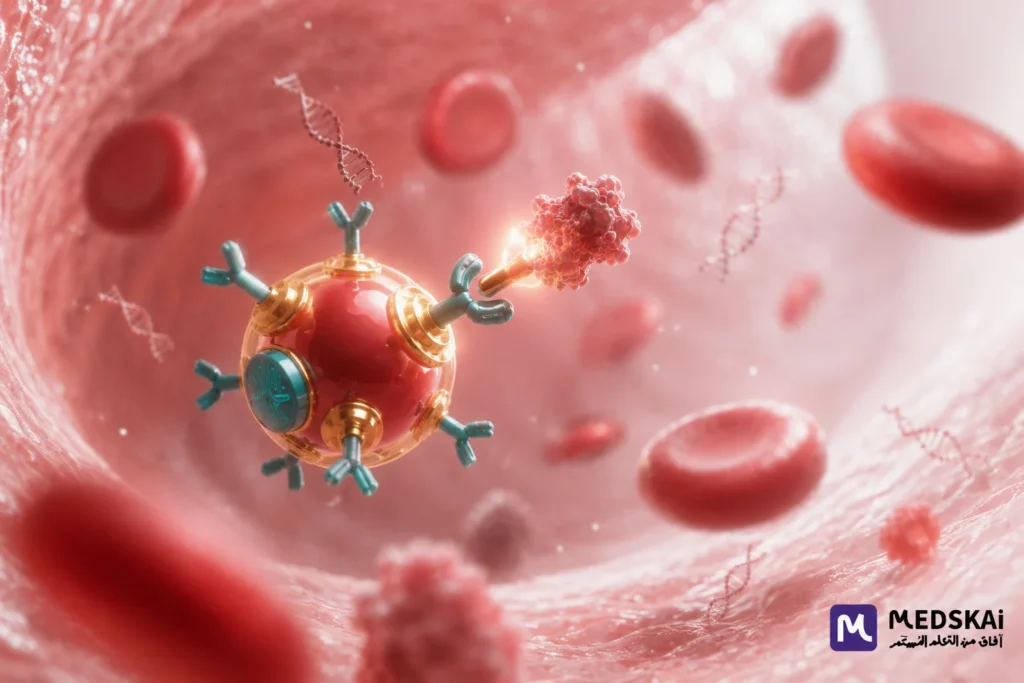
- Infectious disease and point of care. Rapid antigen tests built on gold or magnetic nanoparticles return results in minutes outside a lab the format that scaled worldwide during COVID-19 and that now underpins much point-of-care testing.
- Cancer, early and from blood. Nano-enhanced biosensors and microfluidic chips detect tumor markers and circulating tumor DNA at trace levels the basis of liquid biopsy, which aims to catch signals before symptoms.
- Neurodegenerative disease. Gold-nanoparticle-boosted colorimetric sensors are being developed to pick up Alzheimer’s-linked proteins such as tau in blood, for earlier screening.
- Bacterial detection and resistance. Nanoparticle biosensors capture pathogens such as Listeria faster than culture and can flag antibiotic-resistance markers directly from a clinical sample.
| Aspect | Traditional molecular diagnostics | Nanotechnology-based diagnostics |
| Examples | PCR, qPCR, FISH, ELISA, microarray | Gold-nanoparticle LFA, quantum-dot assays, magnetic biosensors |
| Detection limit | Needs biomarker at detectable levels | Reads trace concentrations |
| Speed & setting | Hours, usually lab-bound | Minutes, often at the point of care |
| Multiplexing | Limited per run | Several targets at once (especially quantum dots) |
| Maturity | Established and validated | Some routine (lateral flow); much still in research |
What is still in the way
The honest picture is one of fast progress against real obstacles:
- Safety and biocompatibility of nanoparticles remain under active study, especially for anything that enters the body.
- Manufacturing consistency and cost are hard to control at scale.
- Regulatory pathways for approving nano-devices are still maturing.
- Large clinical-validation studies are needed before promising lab results to become standard care.
Which is the key caveat worth repeating: outside the rapid tests already in routine use, most advanced nano diagnostic applications are still in research and development.
What is coming next
The near horizon includes nanorobotics, plasmonic and quantum biosensors, and tighter integration with AI to interpret faint signals pointing toward population-scale and at-home screening, and a more proactive, personalized kind of medicine. Promise, though, is not the same as proof, and the field will be judged on which of these tools cross from the lab into the clinic.
Frequently Asked Questions
What is nanotechnology in medical diagnosis?
It is the use of nanoscale materials particles measured in billionths of a meter to detect disease. Because these particles interact directly with individual proteins, DNA, or viruses, they can flag molecular changes far earlier and at lower concentrations than conventional tests.
Have I ever used a nanotechnology test?
Almost certainly. Home pregnancy tests and COVID-19 rapid antigen tests both rely on gold nanoparticles: when the target binds, the particles aggregate and a colored line appears. They are the most widely deployed nano diagnostic in everyday use.
Can nanotechnology detect disease before symptoms appear?
In many cases, yes, that is its core advantage. Nano-enabled biosensors can pick up trace biomarkers, such as tumor DNA in blood, before clinical signs develop. Most of these early detection tools, though, are still in research rather than routine practice.
How is it different from traditional molecular diagnostics?
Conventional tests like PCR or ELISA need a biomarker present at detectable levels and usually run in a lab. Nanoparticle tests read far lower concentrations, often at the point of care, and can screen several targets at once though fewer are clinically validated so far.
Is nanotechnology safe for diagnostics?
For external tests strips and biosensors that never enter the body the safety profile is well understood and considered low risk. Nanoparticles used inside the body are still under intensive study. As with any device, safety depends on careful design and regulatory approval.
Conclusion
The rapid test on a pharmacy shelf and a research biosensor reading tumor DNA sit on the same line just at different points along it. Nanotechnology’s real contribution to diagnosis is not a single gadget; it is a shift in what counts as detectable, pushing that threshold lower and earlier. For students and lab professionals, the useful stance is neither hype nor dismissal: understand the mechanism, respect the limits, and watch which tools cross from the bench into the clinic.
Read also: When Artificial Intelligence Fails in Radiology: Who Is Accountable? – MedSkAI
Want to judge medical research for yourself instead of taking the numbers on trust? Start with MedSkAI’s 10-step foundation course in biostatistics and medical research — from data types to p-values, confidence intervals, and choosing the right test.
This article is for educational purposes only and does not replace consultation with a qualified medical specialist.
Bridge theory and practice in biomedical diagnostics — explore MedSkAI’s specialized courses.
References
1. Market Research Future. Nanotechnology in Medical Devices Market (2025). Diagnostics segment: US$5.15B in 2024 → US$11.63B by 2035. https://www.marketresearchfuture.com/reports/nanotechnology-in-medical-devices-market-34013
2. Advances in Nanotechnology-Based Biosensors for Disease Diagnosis. Preprints.org (Feb 2025). https://www.preprints.org/manuscript/202502.1679
3. Liu Z, et al. Microfluidic biosensors for biomarker detection in body fluids: a key approach for early cancer diagnosis. Biomarker Research (Dec 2024). https://pmc.ncbi.nlm.nih.gov/articles/PMC11622463/
4. Baranwal A, Roy S, Kumar A. Nano-(bio)sensors for on-site monitoring. Front. Bioeng. Biotechnol. (Aug 2024). https://pmc.ncbi.nlm.nih.gov/articles/PMC11392894/
5. Gold Nanoparticle-Mediated Lateral Flow Assays for Detection of Host Antibodies and COVID-19 Proteins. Nanomaterials (2022). https://pmc.ncbi.nlm.nih.gov/articles/PMC9102158/
6. Ultrasound-enrichment + machine-learning colorimetric lateral-flow assay for Alzheimer’s biomarker detection. Advanced Science (2024). https://pmc.ncbi.nlm.nih.gov/articles/PMC11558096/
7. Nanoparticle-enabled portable biosensors for early detection of non-communicable diseases. ScienceDirect (2025). https://www.sciencedirect.com/science/article/pii/S2590137025001025