















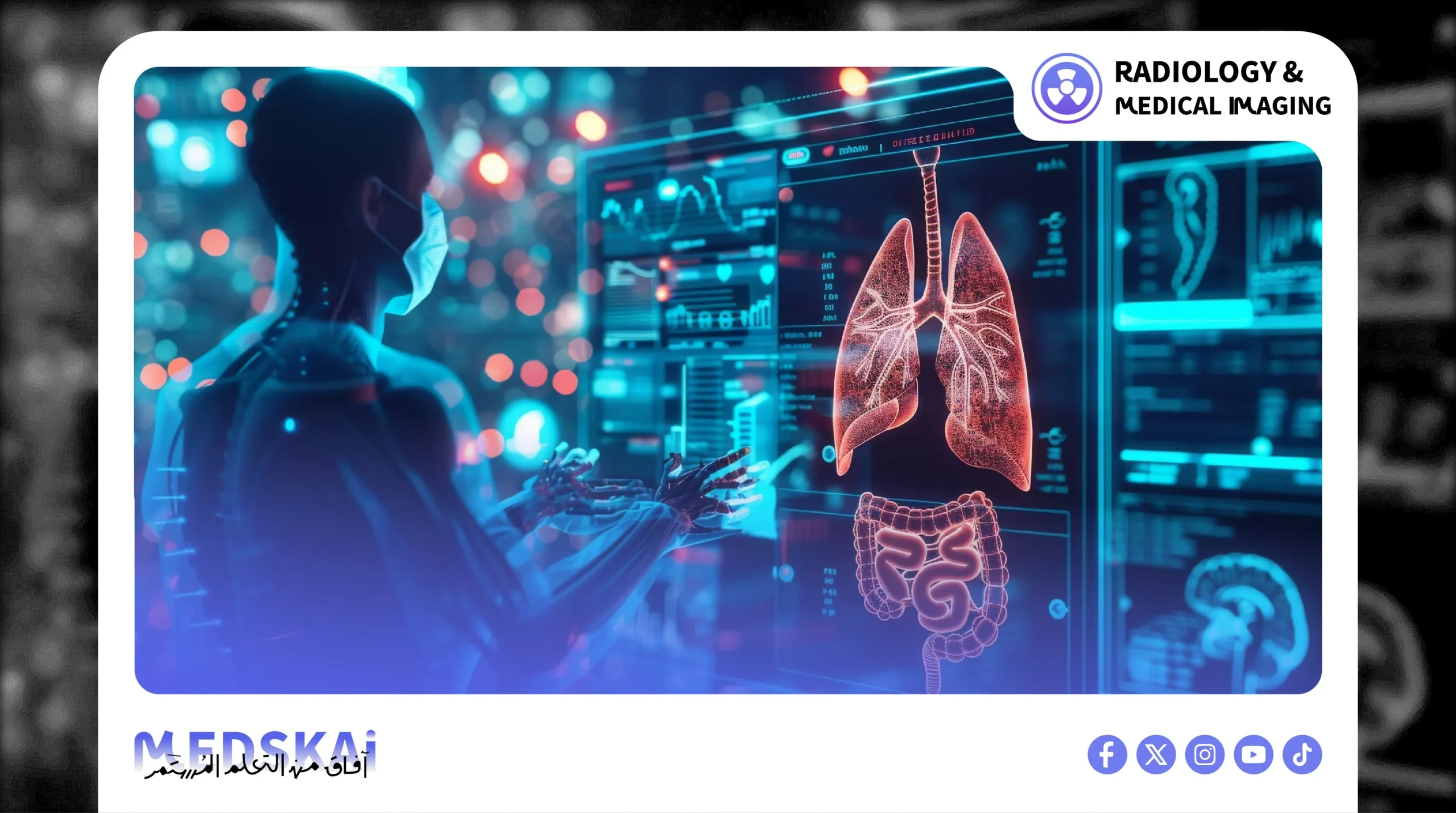
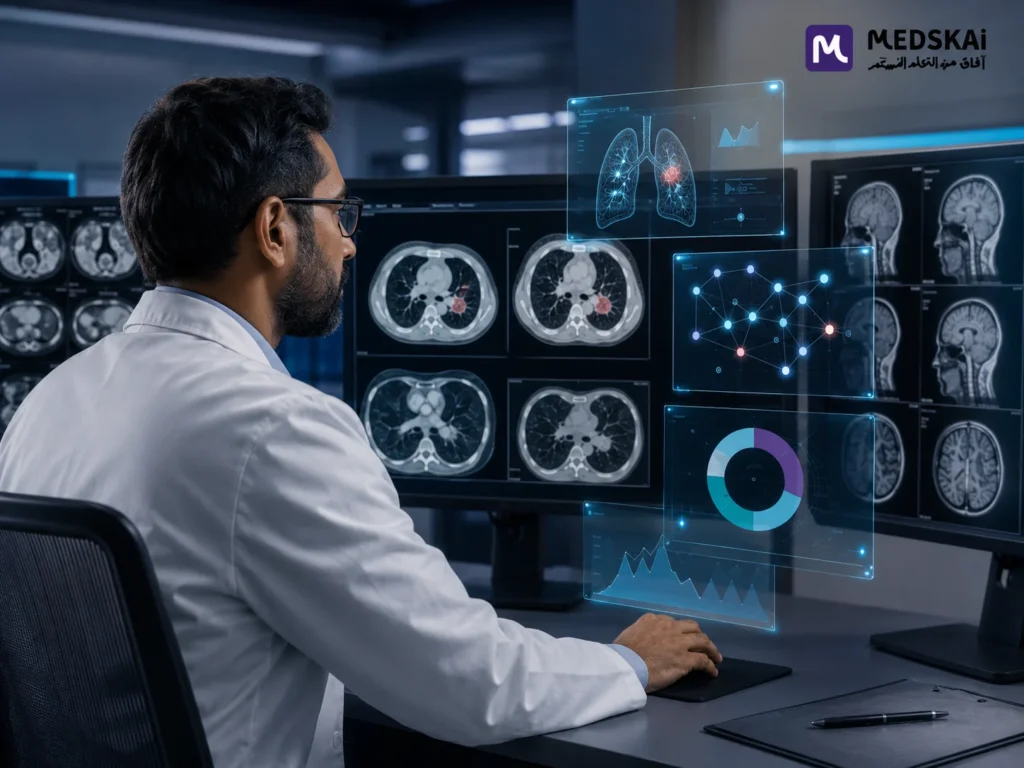
Artificial intelligence in radiology is no longer a futuristic concept; it is actively reshaping diagnostic imaging worldwide. From automated image interpretation to workflow optimization, AI systems are increasingly integrated into radiology departments.
In simple terms, artificial intelligence in radiology works best when it supports radiologists with faster image review, smarter prioritization, and more consistent diagnostic assistance.
Is AI a powerful assistant that enhances diagnostic accuracy, or a disruptive force that may replace specialists? This article explores how AI transforms radiology, its clinical impact and limitations, and what the shift truly means for current and future professionals. The trend is clear in regulation: the FDA has cleared a large and growing number of AI/ML-enabled medical devices, with radiology representing the largest share.
How Artificial intelligence Improves Efficiency and Health Outcomes
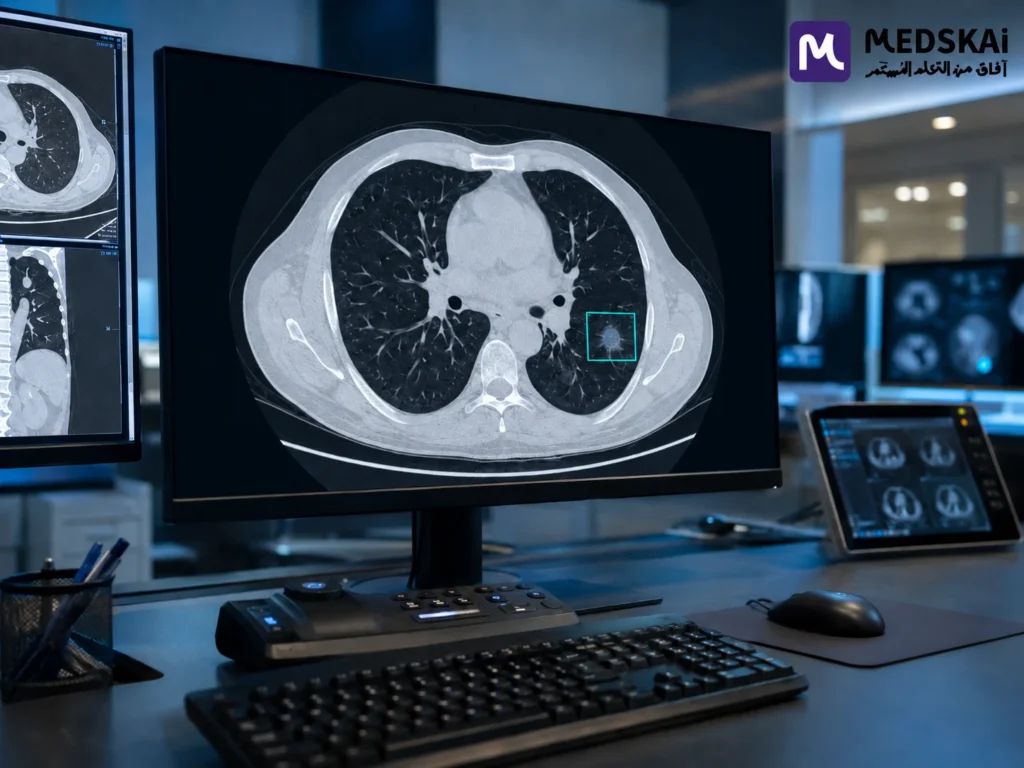
AI enhances radiology by improving workflow efficiency, reducing diagnostic workload, supporting early detection, and increasing accuracy with impact extending beyond interpretation to operations and patient-centered care.
More Efficient Workflow
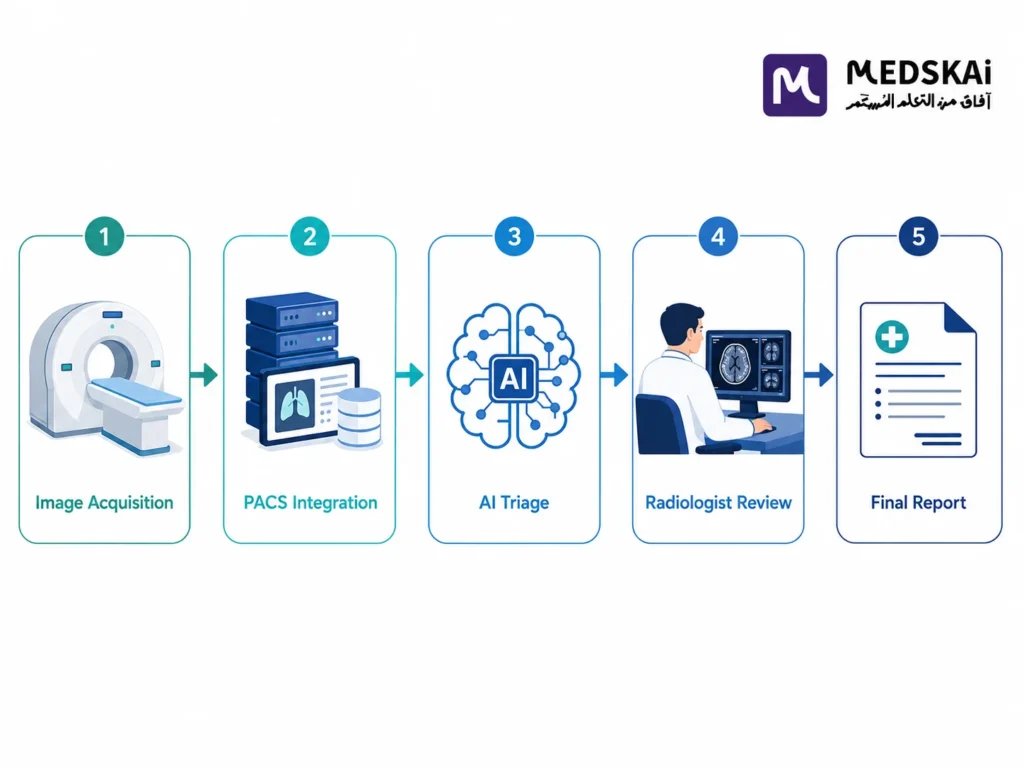
Beyond interpretation, AI assists with scheduling, predicting missed visits, and optimizing patient flow. These do not directly affect interpretation but reduce operational inefficiencies. Real-world integration into PACS and hospital IT often remains the main bottleneck success depends on interoperability, workflow compatibility, and clinician acceptance, not model accuracy alone. One of the strongest benefits of artificial intelligence in radiology is its ability to reduce repetitive workflow tasks while helping radiologists focus on complex cases.
Shorter Reading Time and Reduced Workload
Computer-aided detection, image enhancement, and automated quantification (e.g., nodule measurement, bone age) reduce reading time and improve consistency. These gains depend on proper integration to avoid increasing, rather than reducing, cognitive burden.
Early Detection and Case Prioritization
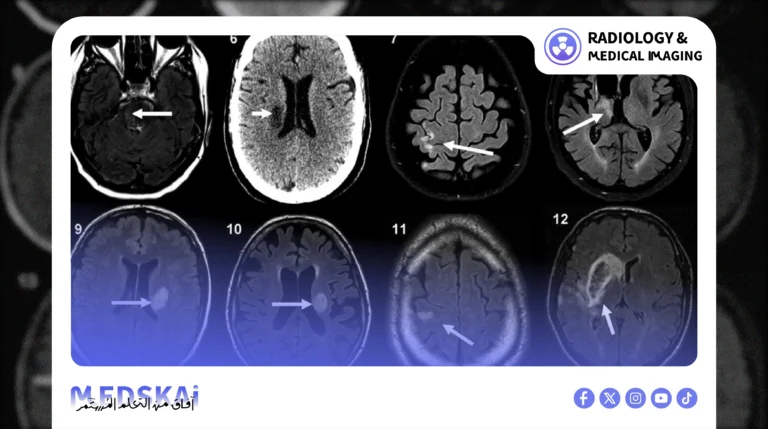
AI supports faster identification of urgent findings in time-sensitive conditions such as stroke or intracranial hemorrhage. AI-based triage has reduced time-to-notification for hemorrhage and large-vessel occlusion, and even modest reductions in reporting time can translate into meaningful outcome improvements.
Artificial intelligence in radiology can also support early detection by flagging urgent or subtle findings that may need faster clinical attention.
Dose and Contrast Reduction
AI can optimize protocols by supporting radiation dose reduction and minimizing contrast use while maintaining image quality particularly valuable in vulnerable populations such as pediatric patients.
Improved Diagnostic Accuracy
AI can enhance sensitivity and specificity. A landmark international study in Nature reported that an AI breast-cancer screening system reduced false positives by roughly 5–6% and false negatives by around 9% versus traditional double reading in certain settingsز Crucially, current evidence indicates the combined performance of AI plus radiologist exceeds either alone augmentation, not replacement.
Opportunities, Challenges, and Criteria for Success
Opportunities include building standards and infrastructure for safe implementation and a framework to classify clinical and research applications by function and value. Challenges are both circumstantial (institutional resistance, variable adoption) and intrinsic (scientific and technical limits), with algorithmic bias a key concern models trained on narrow datasets may underperform across diverse populations, so representative data and external validation are essential.
Ultimately, success depends on tangible value: greater diagnostic certainty, time saved, faster results, lower costs, and better outcomes. Sustainable adoption depends on measurable clinical value, transparent validation, and alignment with real-world workflows.
Deep Learning: Applications and Limits
Deep learning enhances interpretation, supports training, accelerates workflow, and enables automated alerting of urgent cases. It also faces limited transferability across hospitals, interpretability challenges, and overfitting risk. The ‘black box’ nature of some networks can limit transparency in high-stakes decisions, making explainability a key research priority.
Will AI Replace Radiology Specialists?
No. Current evidence indicates AI enhances radiologists’ performance rather than replacing them. AI analyzes images rapidly and assists in identifying abnormalities, but clinical judgment, contextual interpretation, and responsibility for patient care remain with the radiologist. Radiology also involves clinical correlation, multidisciplinary communication, and ethical responsibility. The realistic future is collaborative: AI augments radiologists while specialists retain oversight and final authority.
Frequently Asked Questions
How does AI improve radiology diagnosis?
It improves workflow efficiency, reduces workload, supports early detection of urgent findings, lowers dose and contrast, and can increase sensitivity and specificity when integrated well.
Will AI replace radiologists?
No. Evidence shows AI augments radiologists. Clinical judgment, contextual interpretation, and accountability remain human responsibilities, and the combined performance of AI plus radiologist exceeds either alone. The real value of artificial intelligence in radiology is not replacement, but collaboration between human expertise and machine-based decision support.
What is the ‘black box’ problem in deep learning?
Some neural networks produce outputs without transparent reasoning, limiting clinical transparency. Improving explainability is a key priority for safe long-term adoption.
What limits AI adoption in radiology?
Integration into PACS and hospital IT, interoperability, clinician acceptance, algorithmic bias, and the need for representative training data and external validation.
Conclusion
AI is measurably improving efficiency, safety, and accuracy in radiology, but its value depends on validation, integration, and real-world clinical benefit not algorithmic performance alone.
As AI becomes embedded in imaging, professionals who understand both diagnostic science and artificial intelligence will lead the next phase of healthcare innovation.
This article is for educational purposes only and does not replace consultation with a qualified medical specialist.
Explore structured, evidence-based AI in Medical Imaging programs on MedSkAI and build competencies aligned with modern radiology practice. “Computed Tomography (CT) Basics – MedSkAI“
References
- McKinney, S. M., Sieniek, M., Godbole, V., et al. (2020). International evaluation of an AI system for breast cancer screening. Nature, 577(7788), 89–94. doi:10.1038/s41586-019-1799-6.
- Recht, M. P., & Bryan, R. N. (2017). Artificial intelligence: Threat or boon to radiologists? Journal of the American College of Radiology, 14(11), 1476–1480.