










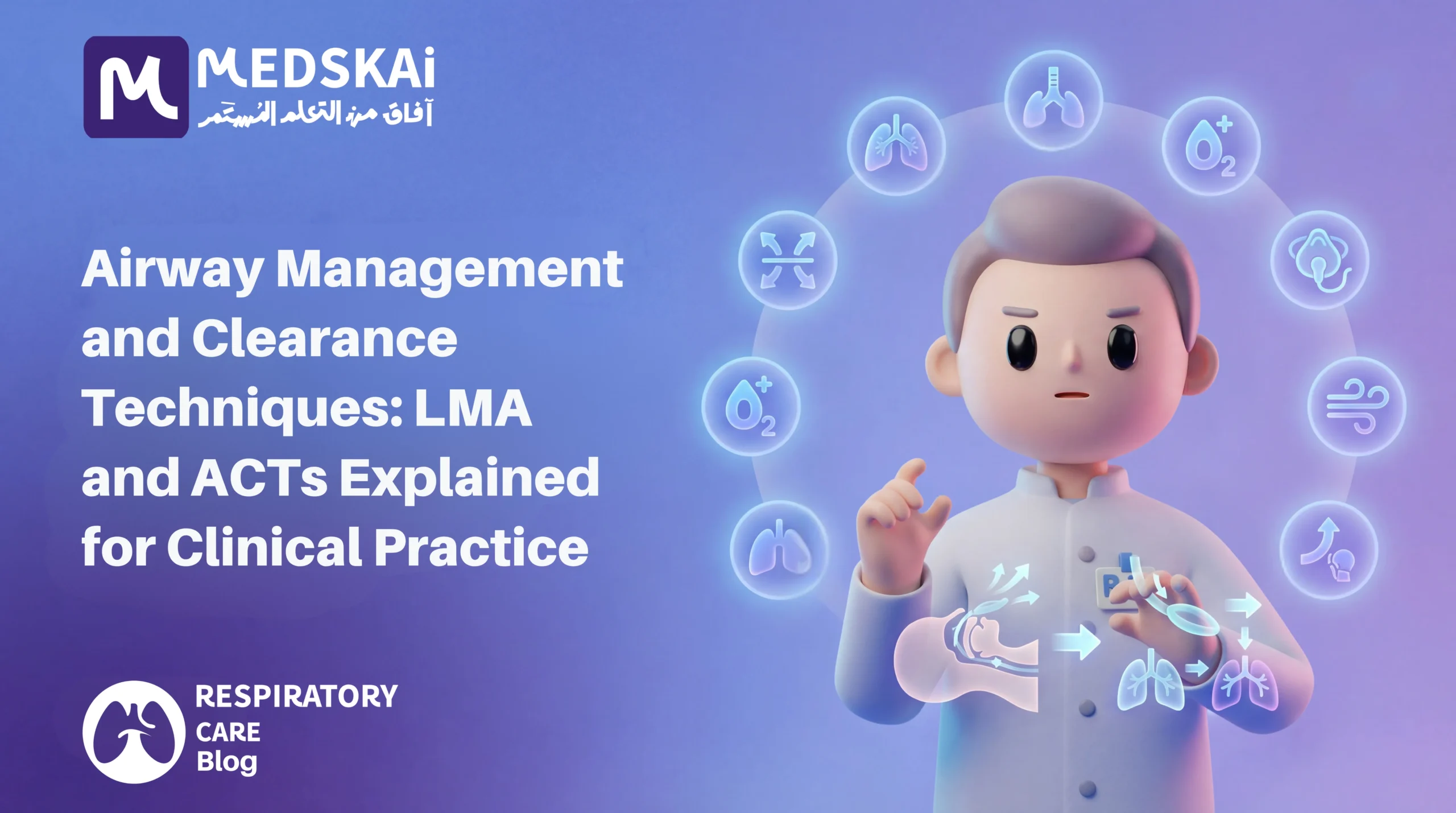
Airway Management and Clearance Techniques: LMA and ACTs Explained for Clinical Practice
In clinical practice, airway management is not just about choosing a device or technique. It is about making the right decision at the right time, especially in patients with respiratory compromise.
While the laryngeal mask airway (LMA) is widely used for its ease and stability, airway clearance techniques (ACTs) are often applied to improve secretion removal. However, not all techniques are equally effective, and in some cases, they may even cause harm if used incorrectly.
This article breaks down the most commonly used airway clearance techniques and explains when they are useful, when they are not, and how to approach LMA use safely in real clinical settings.
What are airway clearance techniques (ACTs)?
Airway clearance techniques (ACTs) are methods used to remove secretions from the respiratory tract and improve ventilation. They are commonly used in patients with mucus retention but should be applied selectively based on clinical condition.
Why Airway Management Decisions Matter
Choosing between airway devices or clearance techniques is not always straightforward. Patient condition, airway stability, and underlying pathology all influence the outcome.
In many cases, improper technique selection may increase complications rather than improve respiratory function.
Types of Airway Clearance Techniques (ACTs)
1. Postural Drainage (PD)
Uses gravity to mobilize secretions toward central airways.
More effective in patients with significant sputum production (>30 ml/day), but may increase dyspnea in some cases.
2. Manual Techniques (Percussion and Vibration)
Applied during exhalation to enhance mucus clearance.
Often used in patients who cannot actively participate, although strong evidence remains limited.
3. Active Cycle of Breathing Techniques (ACBT)
Includes:
- Breathing control
- Thoracic expansion
- Forced expiratory technique (huff)
Helps mobilize secretions using collateral ventilation.
Outcomes are similar to other techniques.
4. Autogenic Drainage (AD)
A three-phase breathing technique:
- Unstick
- Collect
- Evacuate
Effective but technically difficult, requiring good patient cooperation.
5. Positive Expiratory Pressure (PEP)
Exhalation against resistance to maintain airway patency and prevent collapse.
Evidence shows mixed results.
6. Oscillating PEP (OPEP)
Combines pressure with oscillations (e.g., Flutter, Acapella).
Generally comparable to other ACTs.
7. Mechanical Cough Assist
Simulates cough using insufflation and exsufflation.
Highly effective in neuromuscular disorders, but not beneficial in COPD.
8. Intrapulmonary Percussive Ventilation (IPV)
Delivers rapid bursts of air into the lungs.
9. High-Frequency Chest Wall Oscillation (HFCWO)
Uses external vibration (vest systems).
Limited evidence in acute conditions.
Clinical Reality: Do ACTs Always Help?
In practice, airway clearance techniques are frequently used, but evidence shows limited benefit in previously healthy patients with acute respiratory conditions.
In some cases, applying these techniques without clear indication may increase patient discomfort or lead to complications rather than improving outcomes.
Potential Risks of Airway Clearance Techniques
- Decreased oxygen saturation
- Increased oxygen consumption
- Gastroesophageal reflux
- Chest wall injury
- Increased intracranial pressure
These risks highlight the importance of selecting the right technique based on patient condition rather than routine use.
Laryngeal Mask Airway (LMA)
The LMA is widely used due to its ease of insertion and lower hemodynamic response compared to endotracheal intubation.
Advantages of LMA
- Easy insertion
- Less airway irritation
- Reduced postoperative sore throat
- Lower anesthetic gas exposure
Limitations and Risks
- Does not fully protect against aspiration
- Risk of regurgitation (reported 0–23%)
- May be ineffective in patients with:
- bronchospasm
- pulmonary edema
- obesity
Contraindications
- Limited mouth opening
- Upper airway infections
- Structural abnormalities
Decision Point in Clinical Practice
At this stage, the clinician must decide whether airway support with LMA is sufficient or if a more secure airway is required.
Similarly, ACTs should not be applied routinely, but only when there is clear evidence of secretion retention and patient benefit.
Key Takeaways
- Not all ACTs are equally effective
- Evidence for routine use is limited
- Patient selection is critical
- LMA is useful but not risk-free
- Clinical judgment remains essential
Frequently Asked Questions (FAQ)
🔹 What are airway clearance techniques (ACTs)?
Airway clearance techniques (ACTs) are methods used to remove mucus from the respiratory tract and improve ventilation. They are commonly used in patients with secret retention but should be applied selectively based on clinical condition.
🔹 When should airway clearance techniques be used?
ACTs should be used when there is clear evidence of mucus retention or impaired airway clearance. Routine use in previously healthy patients with acute conditions is not always supported by evidence.
🔹 What are the risks of airway clearance techniques?
Potential risks include reduced oxygen saturation, increased oxygen consumption, gastroesophageal reflux, chest wall injury, and increased intracranial pressure, especially if used inappropriately.
🔹 What is the advantage of using LMA?
The laryngeal mask airway (LMA) is easy to insert, causes less airway irritation, and has a lower hemodynamic response compared to endotracheal intubation.
🔹 Does LMA protect against aspiration?
No. LMA does not provide full protection against aspiration. There is a risk of regurgitation, which is why careful patient selection is essential.
🔹 When should LMA not be used?
LMA may not be suitable in patients with high aspiration risk, limited mouth opening, airway abnormalities, or conditions that increase airway resistance such as severe bronchospasm.
Conclusion
Airway management is not about applying techniques routinely, but about choosing the most appropriate intervention based on patient condition and clinical evidence.
While ACTs may provide benefit in selected cases, their routine use is not always justified.
The LMA remains a valuable airway device, but its effectiveness depends on proper patient selection and clinical judgment.
For students and healthcare professionals interested in mastering Airway Management and Clearance Techniques: LMA and ACTs Explained for Clinical Practice, MedSkai offers specialized courses designed to bridge scientific knowledge with real-world clinical applications.
Explore available courses at: https://medskai.com/
Categories
Archives
Tags
ABG
AI
Artificial intelligence
CT
Diagnosis
Egypt
Ethics
GCC 2026
Genomic
Medical
Modality-specific knowledge is essentialModality-specific knowledge is essential
Molecular
MRI
PACS
Patient safety and ALARA compliance are top priorities
PET
Radiology
Radiology interviews focus on clinical judgment
Radiotherapy
RIS
Scenario-based thinking is critical
Structured answers (STAR method) improve performance
US
X-ray
You May Also Like
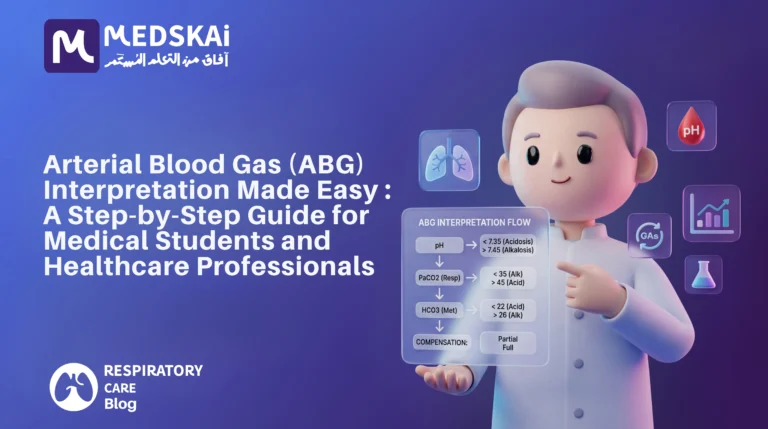
Learn arterial blood gas (ABG) interpretation step by step with normal values, clinical examples, and common mistakes explained for medical...
-
-
March 27, 2026

Company
Help Center
Help Center
Company
mobile app