
















Course description
The first course for the respiratory therapy program graduates is designed to transition the newly graduated Respiratory Therapist (RT) from academic knowledge to high-stakes clinical decision making. The course provides key tips to deal with hypoxic patients focusing on the physiological complexities of oxygenation failure, the precision required in selecting oxygen delivery systems, and how to protect patients from oxygen toxicity. A significant part of the course is dedicated to clarify the mathematical foundations of respiratory care ensuring that practitioners can accurately quantify patient status and ventilator performance in real-time.
Learning Objectives
Upon completion of this course, participants will be able to:
- Analyze the mechanisms of hypoxemia and apply the Alveolar Gas Equation to differentiate between them.
- Distinguish between the four types of hypoxia (Hypoxemic, Anemic, Stagnant, and Histotoxic) through clinical presentation and laboratory data.
- Evaluate the clinical significance of central and peripheral cyanosis, accounting for variables such as hemoglobin concentration and perfusion status.
- Prescribe and Titrate oxygen delivery devices based on patient inspiratory demand, stability of FiO2 requirements, and anatomical considerations.
- Execute complex respiratory calculations with 100% accuracy to help patient monitoring and guide mechanical ventilation monitoring.
Targeted Audience:
- Respiratory therapy students, trainees and graduates
- Healthcare practitioners interested in the course scope
- 8 Sections
- 8 Lessons
- 365 Days
- 1. Introduction to oxygen therapy2
- 2. Hypoxemia vs. hypoxia2
- 3. Oxygen delivery devices2
- 4. Cyanosis2
- 5. Hyperbaric oxygen therapy & oxygen toxicity2
- 6. Respiratory calculations1
- 7. Lung mechanics1
- 8. Mechanical ventilation related equations1

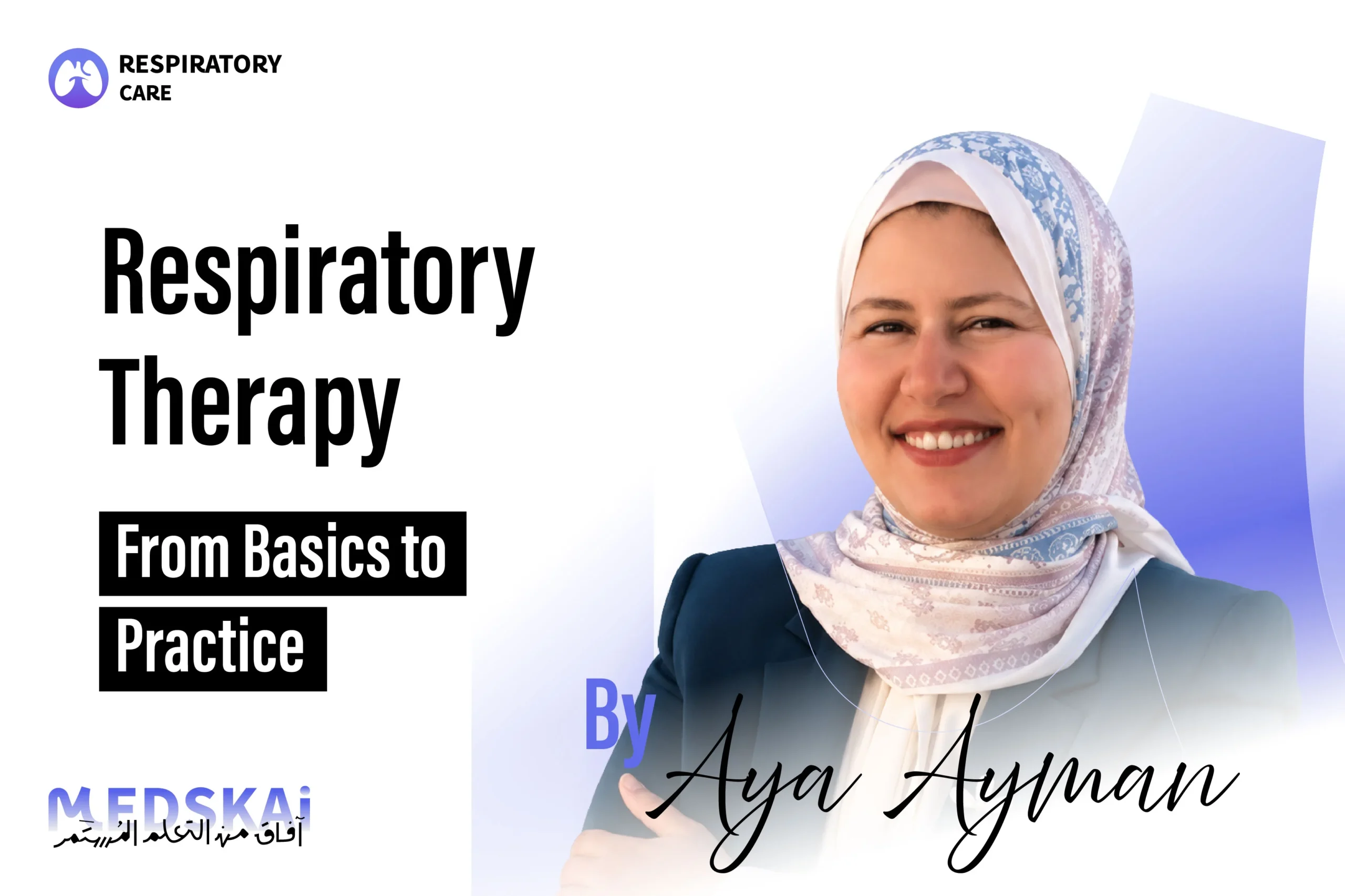
I am a Respiratory therapy & respiratory care specialist, and graduated with first-rank honors in 2019. since 2021, I have served as a university teaching assistant, while also gaining clinical experience at healthcare facilities.


Community Members Only
Join our community to unlock discussions, share knowledge and connect with members.
Join Discussions
Engage in meaningful conversations
Connect
Build relationships with members
Exclusive Access
Access member-only content